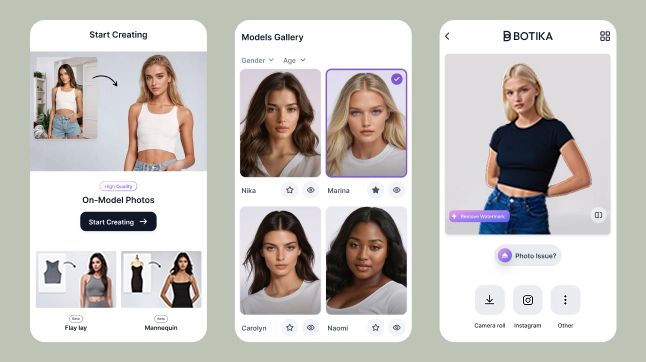
The competitive edge of fashion brands using AI models
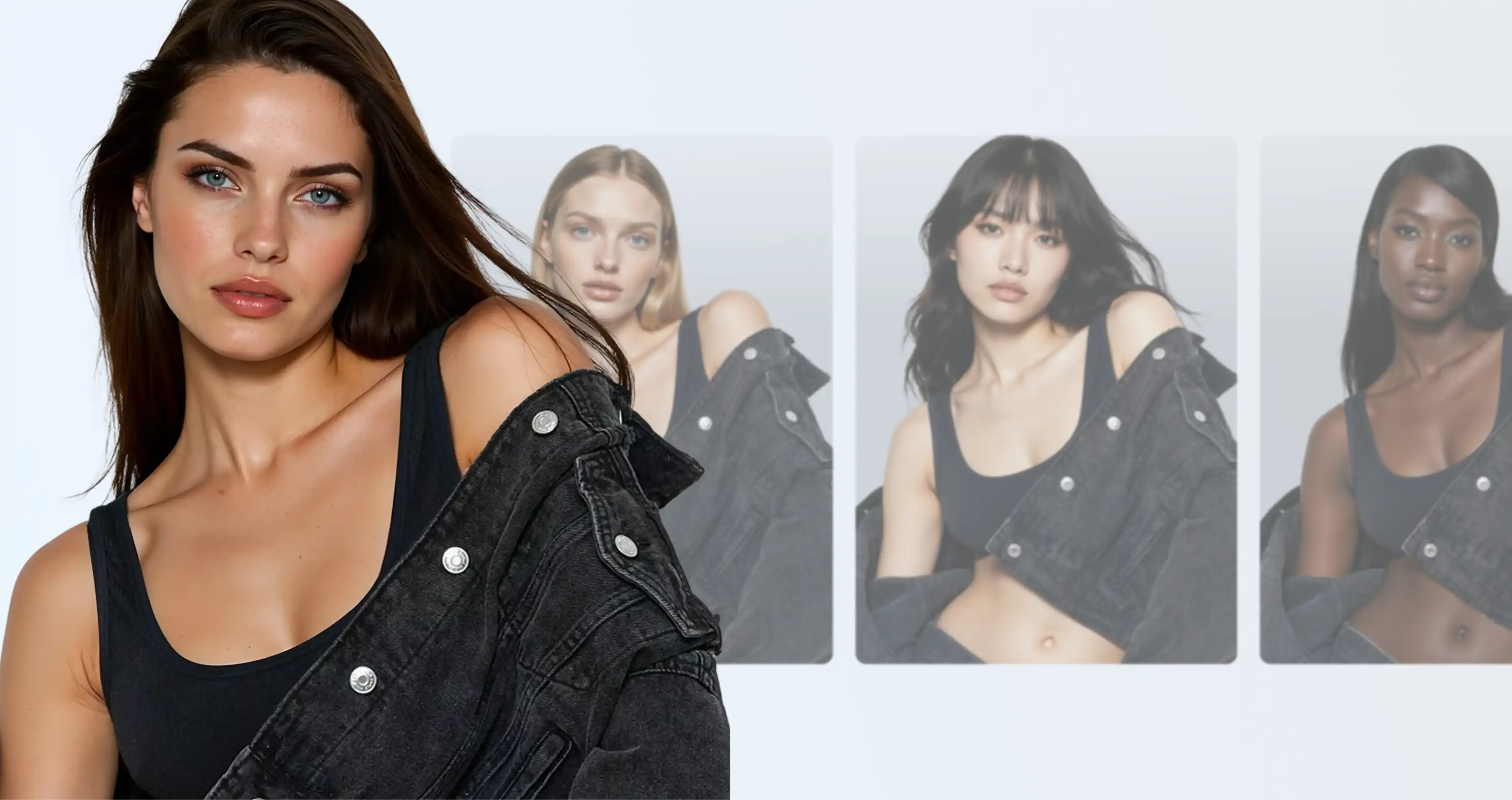
The fashion world is always evolving, and the way brands create visuals is evolving even faster. Today, fashion brands using AI models are scaling content, maintaining visual consistency and launching campaigns faster than traditional photoshoots allow. AI fashion models are no longer a futuristic idea, they’re a practical tool helping brands keep up with the pace of eCommerce and social media demands.
Mid-market brands—nimble online boutiques, fast-fashion labels, and eCommerce-driven companies—are moving quickly to adopt AI fashion models. Luxury houses, known for their iconic campaigns and meticulous visuals, are taking a more cautious approach.
Fashion brands using AI models today are gaining clear advantages: speed, flexibility, and the ability to scale content without compromising quality. That edge is putting mid-market brands ahead in the race to deliver high-quality visuals efficiently.
A fashion brand using AI models is a game changer
For many mid-market brands, the visual side of fashion can be a constant challenge. Shooting multiple SKUs, producing consistent campaign visuals and juggling limited creative teams adds up quickly. Enter AI fashion models: digital models that can be styled, posed and generated at scale, providing highly realistic imagery in hours instead of weeks.
For eCommerce teams, this is transformational. Imagine needing ten different looks for a new collection. With traditional photoshoots, you’re looking at booking models, renting studios, hiring photographers and running dozens of post-production sessions. With AI fashion models, you can create all ten looks digitally, maintain consistency and launch across multiple channels almost instantly.
And the data is compelling. Early eCommerce image testing shows that shoppers respond positively to high-quality, consistent visuals, whether on a product page or social feed. Fashion brands using AI models can produce more content, test it faster, and see what actually resonates with customers, all without the traditional time and cost constraints.
Why mid-market fashion brands using AI models are leading the way
The question is obvious: why aren’t luxury houses jumping in as fast? The answer is a mix of speed, risk and operational realities, and this is where mid-market brands are thriving.
For mid-market brands, every advantage counts. Budgets are tight, teams are lean and every new launch has to hit the market efficiently. AI fashion models reduce production costs dramatically. For a 50-SKU seasonal collection, AI can eliminate the need for multiple models, expensive studios and long post-production cycles. What used to take weeks can now happen in days.
But it’s not just cost. It’s speed and flexibility. Mid-market brands can experiment with different poses, colors and product variations without committing to a full photoshoot. They can test what works on social media, tweak visuals for eCommerce pages, and iterate rapidly based on real engagement data. The learning curve is short and the ROI is measurable.
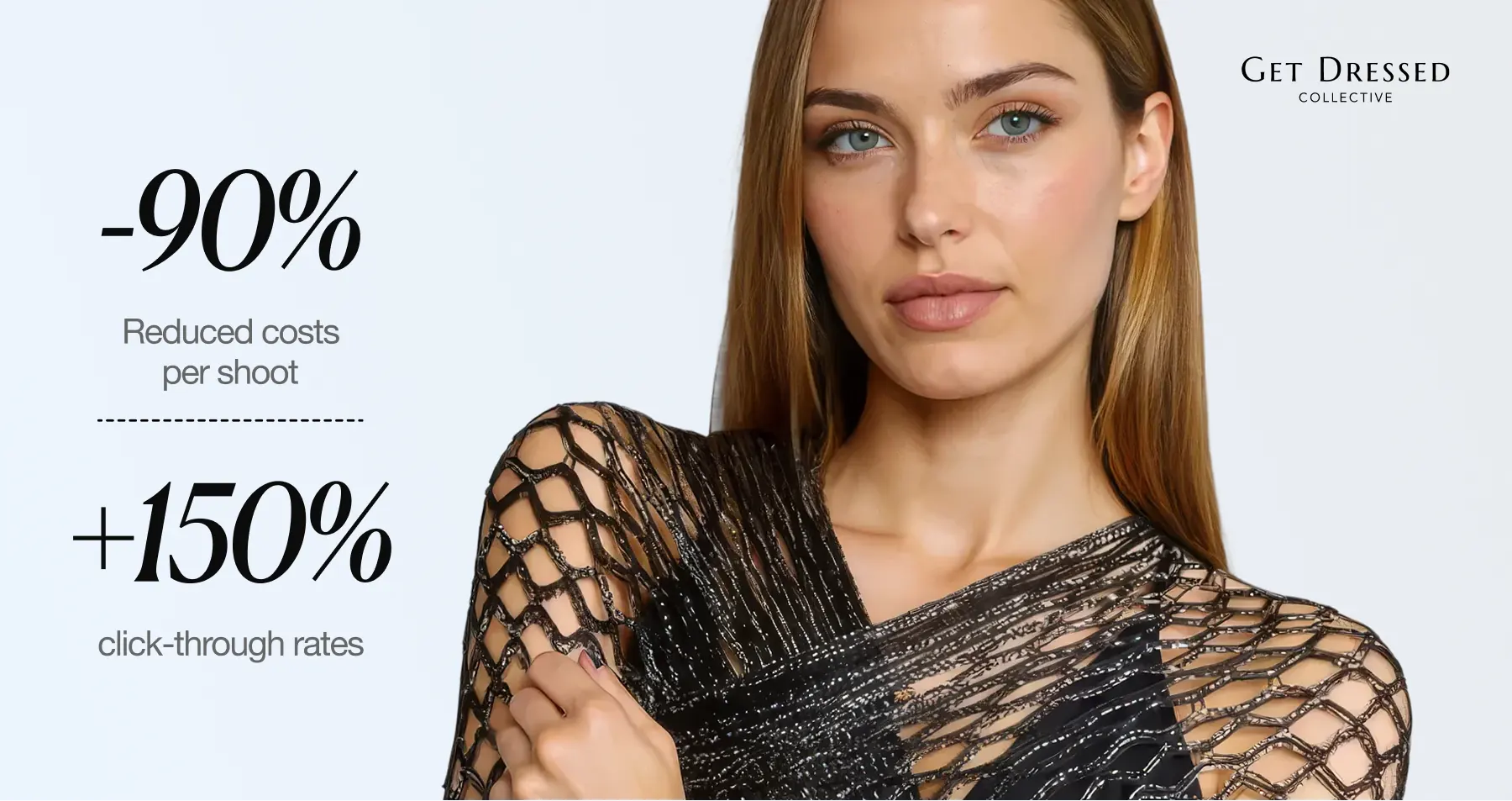
Take Get Dressed Collective, for example. This online boutique used AI fashion models to produce campaign-ready imagery in just days. By eliminating the traditional bottlenecks of studio rentals, model bookings and editing, they reduced costs by nearly 90% per shoot. The result? Campaigns went live faster, click-through rates jumped by 150% and conversions improved across their eCommerce platform. For a mid-market brand, these are game-changing results.
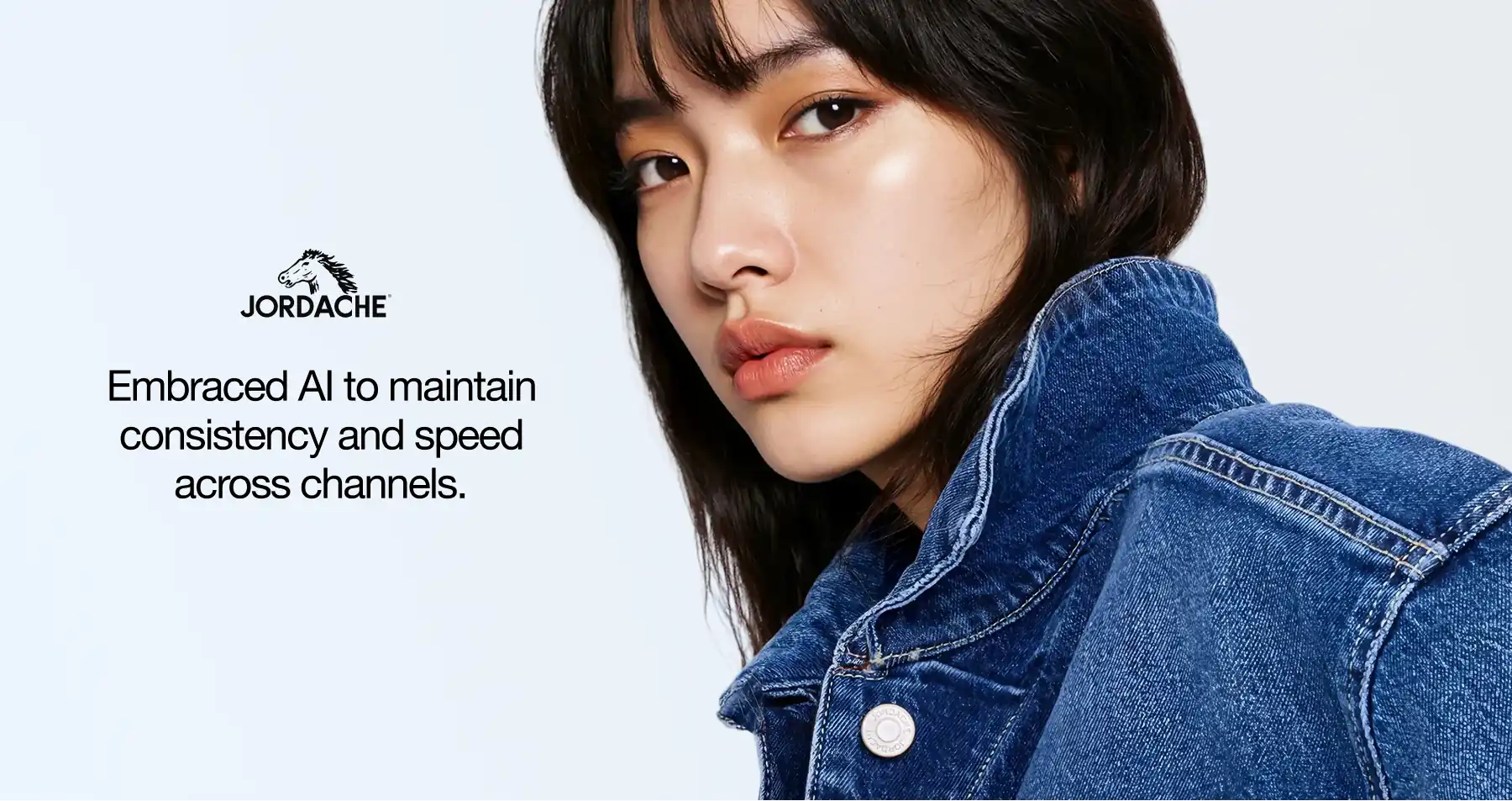
Even brands like Jordache, with multiple SKUs and a growing digital presence, have embraced AI to maintain consistency and speed across channels. The ability to scale visuals while staying on-brand, and cutting production costs by 90%. A clear competitive advantage.
Why Luxury Brands Move More Cautiously
The slower adoption of AI in luxury fashion isn’t about reluctance, it’s about ensuring precision, maintaining brand consistency and protecting consumer trust. Luxury campaigns require every piece of content to undergo multiple levels of review. Traditional production workflows are complex, involving agencies, creative teams, and long approval cycles, which makes testing and iterating visuals more time-consuming.
Past experiences across the industry highlight the importance of careful execution. When Guess released AI generated visuals that were overly stylized and unrealistic, consumers criticized the campaign for lacking authenticity and diversity. Showing how prioritizing novelty over realism can backfire.
J.Crew faced similar challenges when AI generated content felt disconnected from their established tone, sparking discussions about authenticity and consumer trust. In both cases, the issue wasn’t fashion brands using AI models, it was how the visuals were implemented.
Even brands experimenting thoughtfully, like H&M, proceed with caution. They have tested digital twins of real models, but only in controlled campaigns and social content. Transparency, consent and alignment with brand values are central to their approach, allowing them to explore the benefits of fashion brands using AI models without compromising trust or brand integrity.
Other structural factors reinforce this cautious approach. Workflow rigidity and multi-stakeholder approvals slow adoption, and a single misstep in a global campaign can have amplified consequences. For these reasons, luxury brands tend to move deliberately, balancing innovation with precision, consistency and consumer confidence.
Business benefits of using AI fashion models
Fashion brands using AI models gain clear, measurable advantages that transform how they produce content and engage customers.
1. Speed and agility
Fashion brands using AI models can move from concept to campaign-ready visuals in hours or days rather than weeks. Multiple variations, poses and styling options can be tested quickly, enabling teams to see what resonates with audiences and adjust campaigns in real time. This agility is especially valuable in fast-moving eCommerce and social media environments as well as being ahead of a trend, where timing and relevance are critical.
2. Consistency and brand cohesion
Maintaining a coherent visual language across products and channels is effortless for fashion brands using AI models. Whether a brand is launching a 3000 SKU collection or seasonal content, visuals remain polished, on-brand and professional. Consistency strengthens brand identity and builds trust with customers.
3. Workflow efficiency and team focus
AI fashion models integrate seamlessly into existing workflows, even in large organizations with multiple stakeholders and approval layers. By handling repetitive and time-intensive production tasks, AI frees creative and marketing teams to focus on high-value work—concept development, storytelling and strategy—without being bogged down by logistics or production bottlenecks.
4. Enhanced model diversity
AI models make it easier for brands to showcase a wide range of body types, skin tones and styles without the logistical challenges of casting multiple models. This allows for more inclusive campaigns that reflect real-world customer diversity, strengthening brand appeal and connection.
<blogcta>
5. Faster entry into emerging markets
Fashion brands using AI models are able to produce localized, on-brand visuals for new or emerging markets quickly. Without waiting for regional photoshoots or model availability, brands can adapt campaigns to different audiences, test messaging and launch products faster, giving them a competitive edge globally.
6. Data-driven insights
With AI, brands can test variations, measure engagement, and refine campaigns based on real performance data. Creative directors and eCommerce teams can make informed decisions instead of relying solely on instinct or limited photoshoot samples, improving both ROI and audience engagement.
7. Practical implementation
Pre-made AI fashion models remove common barriers to adoption. There are no model rights issues, no complicated prompt engineering, and the visuals are ready to use and aligned with a brand’s style and campaign needs. Even brands with complex approval processes and multiple stakeholders can integrate AI smoothly, making it a current advantage that enhances creativity, efficiency, and business outcomes.
7. Supporting sustainability goals
AI fashion models also help brands meet sustainability objectives. Traditional photoshoots can be resource-intensive, involving travel, studio energy use and multiple outfits and samples that may go unused. By generating high-quality visuals digitally, brands can reduce the need for physical shoots, minimize waste and lower their carbon footprint.
In this way, fashion brands using AI models can turn sustainability into a marketing win. By being transparent and substantive about how AI reduces their carbon footprint, brands can strengthen consumer trust and differentiate themselves in the market. When executed thoughtfully, this approach not only supports eco-conscious practices but also insulates brands from backlash—like what J.Crew and Guess experienced—and becomes a compelling part of the brand story that resonates with customers.
Real-world examples of fashion brands using AI models
BLVCK
BLVCK faced a challenge: they needed to produce a large volume of high-quality campaign images quickly, without the delays and costs of traditional photoshoots. Using AI fashion models, they were able to generate multiple visual variations of each product — from different angles, poses, and styling — in a fraction of the time.
This not only sped up content production from weeks to days but also allowed the creative and marketing teams to experiment freely, iterate on campaign concepts and maintain tight control over brand consistency. The AI workflow seamlessly integrated into their existing processes, letting teams focus on high-value creative decisions instead of logistics and studio coordination.
The result: BLVCK significantly reduced production costs, eliminated logistical bottlenecks, and gained the agility to scale campaigns rapidly while keeping visuals polished, consistent and on-brand.
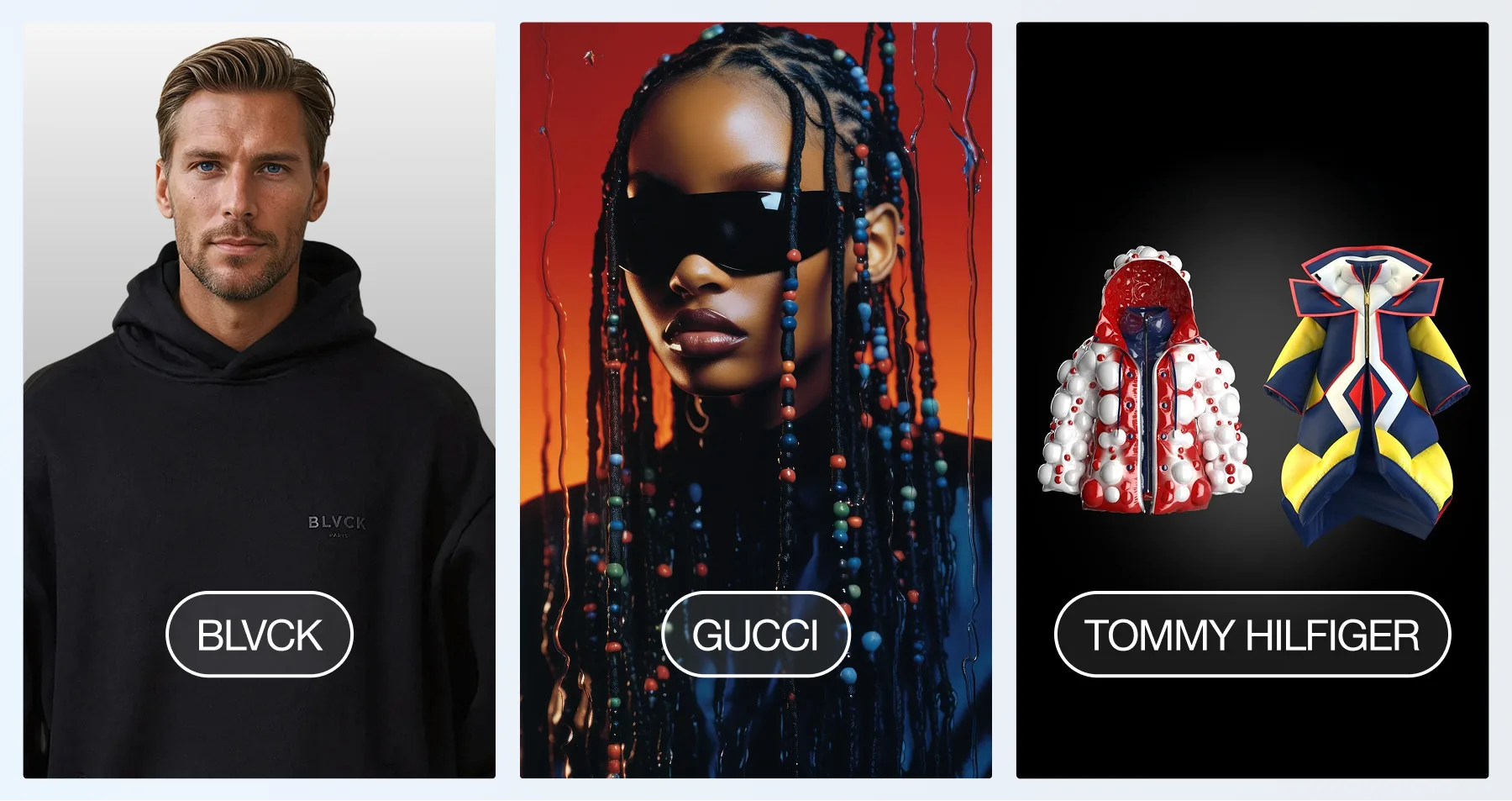
Gucci
Gucci has leaned into generative AI in a creative way for its Fall/Winter 2025 campaign. By using AI to produce campaign visuals, the brand is experimenting with how AI can enhance storytelling rather than just serve as a production shortcut. The approach allowed Gucci to explore innovative, artistic imagery while keeping everything aligned with its luxury identity.
The result: Gucci successfully integrated AI into high-end creative work, demonstrating that technology can expand possibilities without compromising brand integrity.
Tommy Hilfiger
Tommy Hilfiger is one of the major fashion brands using AI models to speed up campaign testing and content creation for online channels. By producing multiple AI generated visual variations for products, the marketing team can quickly see which styling or compositions resonate best with their audience, reducing time spent on traditional photoshoots and post-production. This also allows them to scale content efficiently across eCommerce and social channels without adding resources.
The result: Tommy Hilfiger can launch campaigns faster, make data-driven creative decisions, and maintain consistent, high-quality visuals across all digital channels.
What the future holds for fashion brands using AI models
Fashion brands using AI models are redefining what’s possible in visual storytelling. Beyond speed and efficiency, AI opens doors to experimentation at scale—testing new styles, concepts, and diverse representations without the limits of traditional photoshoots. This agility allows brands to respond instantly to trends, explore creative risks and reach audiences in new markets with consistent, on-brand imagery.
Looking ahead, AI will likely become a standard part of the fashion production toolkit. Luxury and mid-market brands alike will blend AI with traditional shoots, using digital models to handle volume, speed and experimentation, while reserving real-world campaigns for marquee moments.
Those who adopt now are not just optimizing workflow, and creating a competitive advantage, they’re shaping audience expectations and influencing how fashion campaigns will be created, consumed, and measured in the years to come.
<blogcta-2>
.webp)

.webp)
.webp)