Sustainable Fashion Practices: From Talk to Action
.webp)
Shoppers today aren’t just browsing, they're making conscious choices. They want more than trendy designs or competitive prices; they want to understand the environmental impact of what they wear. That’s why sustainable fashion practices are no longer optional, and why carbon footprint fashion labeling has become a must-have for brands looking to show real transparency.
Displaying the carbon cost of a product isn’t just a nice touch, it’s proof. It tells your customers you’re serious about sustainability, builds trust and helps shoppers feel confident buying from your brand. In this post, we’ll break down what carbon footprint fashion labeling is, why it matters, how top brands are using it and how your brand can adopt it to lead with transparency and responsibility.
Why carbon footprint fashion labeling is central to sustainable fashion practices
Beyond being a nice-to-have for conscious shoppers, a carbon footprint fashion label is a tool that can transform how your brand communicates sustainability. It makes the invisible visible. Instead of vague terms like “eco” or “green,” a clear label shows exactly what goes into making a product; materials, manufacturing, shipping and packaging.
This transparency does more than inform, it builds trust. Shoppers see that you’re not just claiming sustainability; you’re providing real, tangible data they can understand and compare. That clarity positions your brand as credible and accountable, turning sustainability into a measurable sustainable fashion practice rather than a marketing slogan.
It’s also a chance to influence how your business operates. Once you measure emissions, you can track them, make improvements, and show progress over time. In short, carbon labeling is more than a badge, it’s a signal that your brand is serious about doing fashion differently, for the planet and for your customers.
What is a carbon footprint fashion label? How does it support sustainable fashion practices?
A carbon footprint fashion label is a simple tag (on your website or physically on a product) that shows the estimated greenhouse gas emissions behind that item. Think of it as a snapshot of its environmental impact, usually expressed in kilograms of CO₂e.
These labels are based on a life cycle assessment (LCA), which looks at everything from raw materials and manufacturing to shipping, packaging, and sometimes even what happens at the end of the product’s life. Unlike vague terms like “eco” or “sustainable,” a carbon label gives a real, measurable number that shoppers can understand and compare.
Putting this information front and center on your product pages is a smart sustainable fashion practice. It doesn’t just signal your commitment, it makes the impact visible and actionable for your customers. And internally, it helps your team stay accountable: once you measure it, you can track it, manage it and reduce it over time.
Why your brand should adopt carbon footprint fashion labeling as a sustainable fashion practice
- Improves operational decision-making
When you introduce a carbon footprint fashion label, you’re not just creating transparency for shoppers, you’re giving your team better visibility into what’s really happening across your supply chain.
Clear carbon data shows which materials, partners, or processes create the most impact. That makes it easier to refine your workflow, reduce inefficiencies and strengthen your sustainable fashion practices in a meaningful, measurable way.
- Supports long-term cost reduction
One of the biggest surprises for brands is how often high-emission steps also carry high costs. By adopting carbon footprint fashion labeling, you uncover the places where energy, shipping, or materials are doing more harm — and costing more — than you thought.
When you address those hotspots, you improve your sustainability and your margins at the same time. It’s the kind of efficiency win that makes sustainability feel practical rather than performative.
- Drives conversions
Shoppers pause when they’re unsure about environmental impact. A clear carbon footprint label removes that guesswork.
It gives people real numbers they can trust, helping them feel confident about the choices they make. And the more confident they feel, the more likely they are to convert.
- Differentiates you in the market
Most fashion brands still rely on broad sustainability statements without offering real proof. When you make a carbon footprint fashion label part of your sustainable fashion practices, you set yourself apart instantly. You show that your transparency isn’t a trend, it’s part of how you operate. And in a crowded industry, that level of clarity becomes a major competitive advantage.
.webp)
How generative AI reduces the footprint behind fashion content
Even when a product is made sustainably, the content that promotes it often isn’t. Traditional photoshoots require models to fly in, teams to travel and large amounts of materials for hair, makeup, lighting and sets. All of that adds to a brand’s overall carbon footprint, even if the clothing itself is responsibly made.
Generative AI helps cut that impact dramatically. By using AI fashion models and digital production workflows, brands can eliminate many of the most carbon-intensive parts of a shoot:
- No flights for models or crew
- No hotel stays or transportation logistics
- No hair and makeup materials
- No set construction or single-use props
- Fewer sample shipments
You still get high-quality, on-model visuals, but without the resource-heavy production cycle. This shift doesn’t just save time and budget, it meaningfully reduces the environmental footprint tied to content creation itself.
Pairing AI visuals with carbon footprint fashion labeling creates a full-circle sustainable fashion practice: you’re reducing impact behind the scenes and giving shoppers the transparency they expect on the product page.
How leading fashion brands are using carbon footprint fashion labeling today
Some fashion brands aren’t just talking about sustainability, they’re putting it front and center in ways shoppers can understand at a glance.
Allbirds

Allbirds is a standout example. Every product they make comes with a carbon footprint fashion label that shows the estimated impact of materials, production, transport, and packaging. They even set a public goal to cut their per-product footprint in half, and they’ve launched a net-zero carbon sneaker using regenerative wool, sugarcane bio-foam and methane-capture bioplastic.
Their collaboration with Adidas pushed the idea even further. Together, they created a performance sneaker designed around low emissions, with a footprint notably below a standard athletic shoe. The carbon data is displayed like a quick “impact snapshot,” making it easy for shoppers to understand without digging through technical details. It proves that performance and low emissions can coexist.
Asket
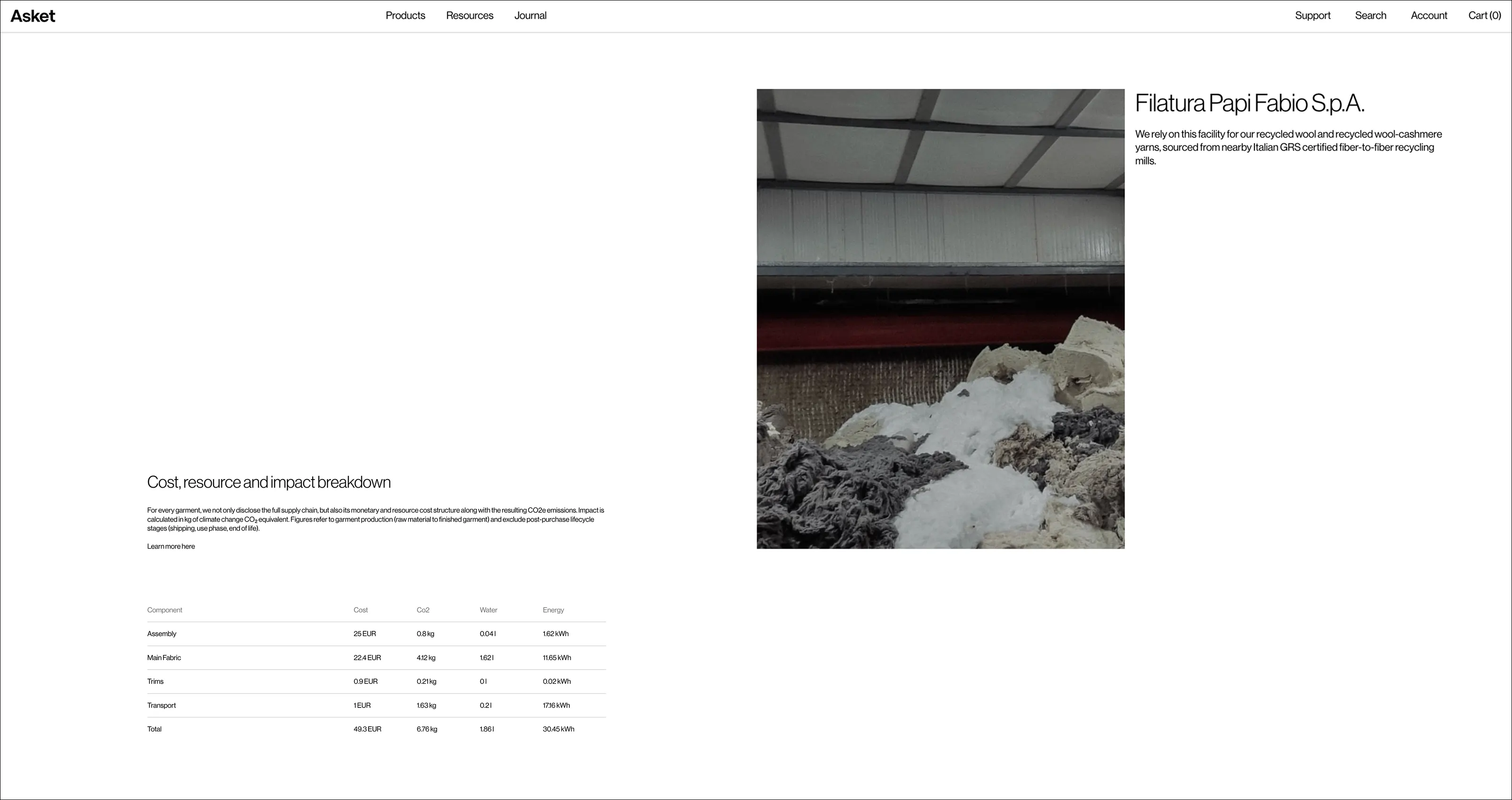
Asket takes transparency a step further by giving shoppers a full environmental “receipt” for every garment. These receipts break down not just carbon emissions, but also water usage and energy consumption across the product’s lifecycle.
Instead of leaving sustainability as a vague promise, Asket shows exactly where the impact comes from, sourcing materials to manufacturing and shipping.
This approach makes their sustainable fashion practices tangible for shoppers, helping them see the difference between products and make choices they can feel good about. It also encourages accountability within the brand itself, guiding decisions that reduce environmental impact over time.
Continental Clothing Co
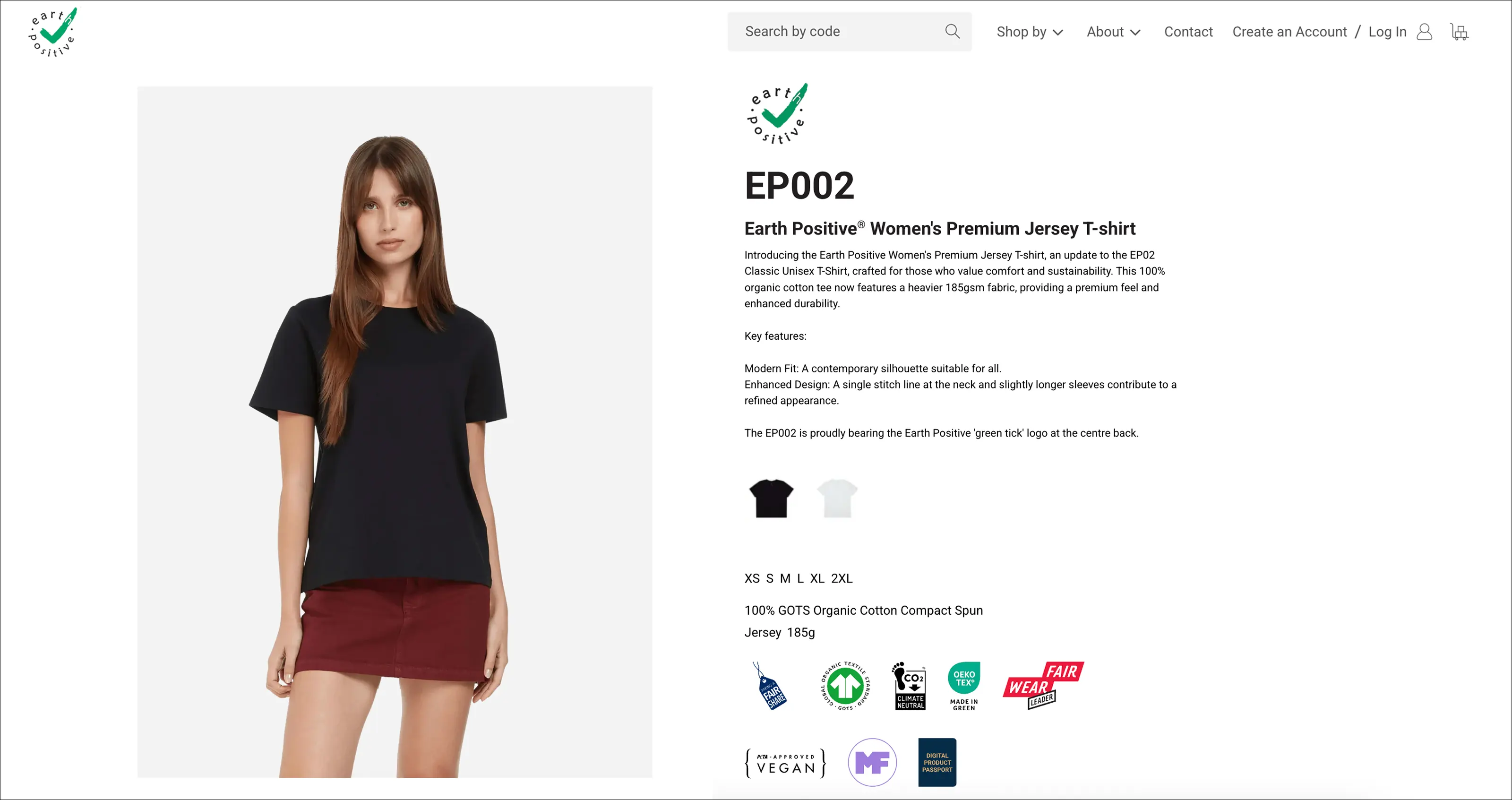
Continental Clothing Co. takes a hands-on approach to transparency by using a carbon reduction badge on many of its products. This badge highlights the environmental impact of each item, covering everything from raw materials and manufacturing to transport and end-of-life disposal. By making this information visible, they turn sustainability into something tangible for shoppers, rather than just a slogan.
It also guides the brand internally, helping them make smarter choices about fabrics, production methods and logistics. This kind of sustainable fashion practice demonstrates that even everyday wardrobe staples can be designed with both quality and low environmental impact in mind, giving conscious consumers an easy way to shop responsibly.
Each of these examples demonstrates how carbon footprint fashion labeling isn’t just a marketing tactic, it’s a core part of sustainable fashion practices that builds trust, drives engagement, and helps shoppers make informed choices.
How to implement carbon footprint fashion labeling within your sustainable fashion practices
Here’s a practical playbook for integrating carbon footprint labeling into your fashion brand’s strategy:
1. Measure your carbon footprint
- Conduct a lifecycle assessment (LCA) or partner with a firm that specializes in sustainability data.
- Gather data across all relevant stages: raw materials, manufacturing, transport, packaging, and disposal (if possible).
- Establish a transparent methodology, so customers know how you arrived at your numbers.
2. Design a clear, trustworthy label
- Display the CO₂e number clearly (ex: “7.1 kg CO₂e”).
- Add a brief context or comparison line (ex: “Equivalent to driving 10 miles” or “Similar to charging your phone 500 times”).
- Use clean visuals: a badge, icon, or minimal infographic that is noticeable but doesn’t overwhelm your product page.
3. Place your label smartly
- On your website
Near price or “Add to Cart,” or right below product name. - On physical tags
Hang tags, insole prints, or packaging inserts. - Include a “Learn More” link to drive interested shoppers to a more detailed sustainability or transparency page.
4. Tell the Story Behind It
- Explain the carbon footprint fashion label on a “Sustainability / Transparency” page.
- Share your goals: current footprint, reduction targets, and how you plan to improve.
- Report progress regularly. Quarterly or annual updates show accountability and real sustainable fashion practices in motion.
5. Train Your Team
- Make sure customer support, marketing and social media folks understand what the carbon label means.
- Enable them to answer common shopper questions
- “Why is this higher than another style?”
- “How are you reducing over time?”
- Embed the carbon footprint story in your brand voice, so it's consistent and authentic.
<blogcta>
Communicating your sustainable fashion practices without overclaiming
When you roll out a carbon footprint fashion label, how you talk about it matters. Here are some best practices:
- Be transparent and humble
- Use real data.
- Acknowledge that you’re on a journey, not already perfect.
- Use simple, honest language
- Avoid greenwashing.
- Keep explanations short and understandable.
- Visuals help
- Use icons, badges, or small charts to make the carbon label actionable.
- A “nutrition-style” breakdown can feel familiar and educational to consumers.
- Show progress
- Regularly report improvements and updates (Ex: “We reduced average CO₂ per product by X% this year”).
- Set future goals and communicate them clearly.
- Transparency over time becomes a powerful trust builder.
.webp)
The future of carbon footprint fashion labeling in sustainable fashion practices
Imagine walking into a store or scrolling through an online catalog, where every product comes with a clear, easy-to-read carbon footprint badge.That’s not a distant vision; it’s where the fashion industry is headed. As shoppers become more eco-conscious, transparency won’t just be a nice touch it will be expected. Consumers will start to compare products not just on style or price, but on their environmental impact.
At the same time, regulatory frameworks are catching up. Governments in Europe, North America and beyond are exploring rules that would require brands to disclose emissions or use standardized carbon labeling. Early adopters won’t just be ahead of the curve, they'll be shaping it. Brands that integrate carbon footprint fashion labeling now will have a head start in building trust, credibility, and a reputation as genuine leaders in sustainable fashion practices.
The ripple effect is already visible. As more brands embrace transparency, carbon labels will move from a standout feature to a baseline expectation. It will create a culture where accountability is built into design, sourcing, and production. In the near future, carbon labeling won’t just inform shoppers, it will drive design decisions, inspire innovation and push the entire fashion industry toward measurable sustainability.
By taking action now, brands don’t just keep up with trends they help define the next era of fashion: one where style, performance and environmental responsibility are inseparable.
Make carbon footprint labeling a core part of your sustainable fashion practices
Sustainable fashion practices aren’t just a checkbox, they’re the foundation for the next generation of fashion brands. A carbon footprint fashion label is more than a badge; it’s a signal of authenticity and a tool to spark change. When you put transparency at the center of your brand, you aren’t just proving your commitment, you’re inviting your customers to be part of the journey.
The brands that lead tomorrow will be the ones who integrate transparency into every decision: from design and sourcing to production and storytelling. This isn’t about performing sustainability, it's about making it measurable, visible, and actionable. Shoppers will remember the brands that made it easy to understand the impact of their choices.
Pairing carbon labeling with smart, efficient workflows—like using Botika’s AI fashion models to create visuals with less waste—lets your brand scale responsibly without sacrificing creativity or quality. It’s a chance to show that innovation and responsibility can coexist.
The real power of carbon footprint labeling lies in what it enables: informed customers, smarter internal decisions, and a culture of accountability. When done right, it turns sustainability from a statement into a defining part of your brand identity.
Start by measuring, labeling, and sharing. Then let the transparency guide the rest of your journey. In the end, your brand won’t just participate in sustainable fashion practices, it will shape the future of fashion itself.
.webp)