Fashion industry trends 2025 Year in Review

The fashion industry trends 2025 are all about speed, storytelling, and technology. This year, fashion moved faster than ever, not just on runways but in the way brands connect with culture, consumers, and technology.
Visual storytelling became more dynamic, collaborations extended beyond apparel, and AI shifted from an experimental tool to a strategic core. For brands, the question is no longer if AI will play a role; it’s how. How does it enhance conversion, preserve brand voice, and maintain authenticity?
This year’s fashion highlights can be grouped into three major threads:
- The biggest fashion moments and cultural collaborations
- The rise of AI models and major brands deploying them
- The controversy and ethical debate around AI in fashion
We’ll close with what these trends mean for fashion businesses in 2026 and how to adopt AI responsibly, ensuring it strengthens both creativity and brand integrity.
1. Fashion industry trends 2025: Cultural collaborations take center stage
2025 showed that fashion isn’t just about clothing—it’s about culture. Major collaborations between brands, musicians, artists, and lifestyle communities dominated the year.
Fashion meets music, art and pop culture
Music, gaming, and art influenced fashion in unprecedented ways. Sneaker drops tied to top artists, capsule collections inspired by digital art, and limited-edition accessories launched in collaboration with gaming platforms blurred the lines between fashion and entertainment.
These collaborations weren’t just marketing stunts—they created cultural relevance and sparked conversations that extended beyond the traditional fashion audience. Brands tapped into communities that were highly engaged and culturally literate, effectively turning fans into brand ambassadors.
For instance, campus-inspired trends continued to grow. Gen Z students, influencers, and micro-communities became a powerful force in shaping fashion campaigns. Brands that integrated these micro-influencer insights into their campaigns could reach audiences in a more authentic way.
Sustainability as a cultural statement
Sustainability was a non-negotiable part of fashion industry trends 2025. Eco-conscious collections weren’t just about materials—they were about story, narrative, and brand values. Brands embraced recycled fabrics, upcycled designs, and circular fashion strategies to tell a story that resonated with modern consumers.
The most effective sustainable campaigns went beyond product messaging. They connected with culture, communities, and global issues, reinforcing the brand’s identity while also aligning with consumer expectations.
Diversity and inclusion as a market imperative
Representation in fashion is no longer optional. Size-diverse collections, inclusive campaigns, and authentic storytelling became core to the 2025 trends. Consumers increasingly expect brands to reflect real-world diversity, and those that don’t risk losing credibility and engagement.
The industry saw more campaigns led by underrepresented voices, more inclusive runway presentations, and marketing campaigns that genuinely celebrated diversity.
Cultural collaborations, sustainability, and inclusion aren’t just trends—they’re strategic pillars shaping the future of the fashion industry.
<blogcta-2>
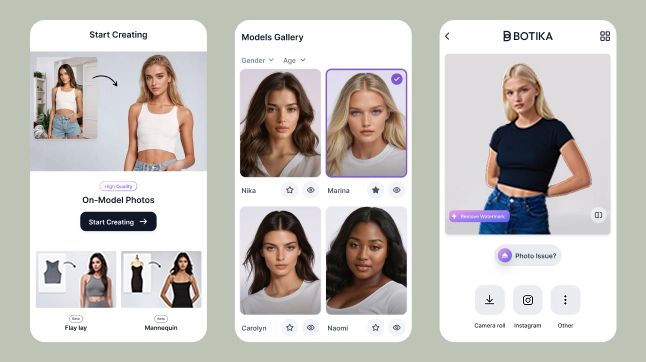
Showcase inclusivity with AI generated models - diverse in tone, body and style - so your visuals reflect real customers, everywhere.”
2. AI models: From novelty to strategic tool
One of the most transformative fashion industry trends 2025 is the rise of AI models in both marketing and design. Brands moved past experimentation and into full strategic deployment.
Brands Expanding AI Adoption
It isn’t just H&M experimenting with AI models for clothing anymore. Major global brands, from fast fashion players to high-end luxury labels, are deploying AI at scale to create visuals, test campaigns, and even predict style trends.
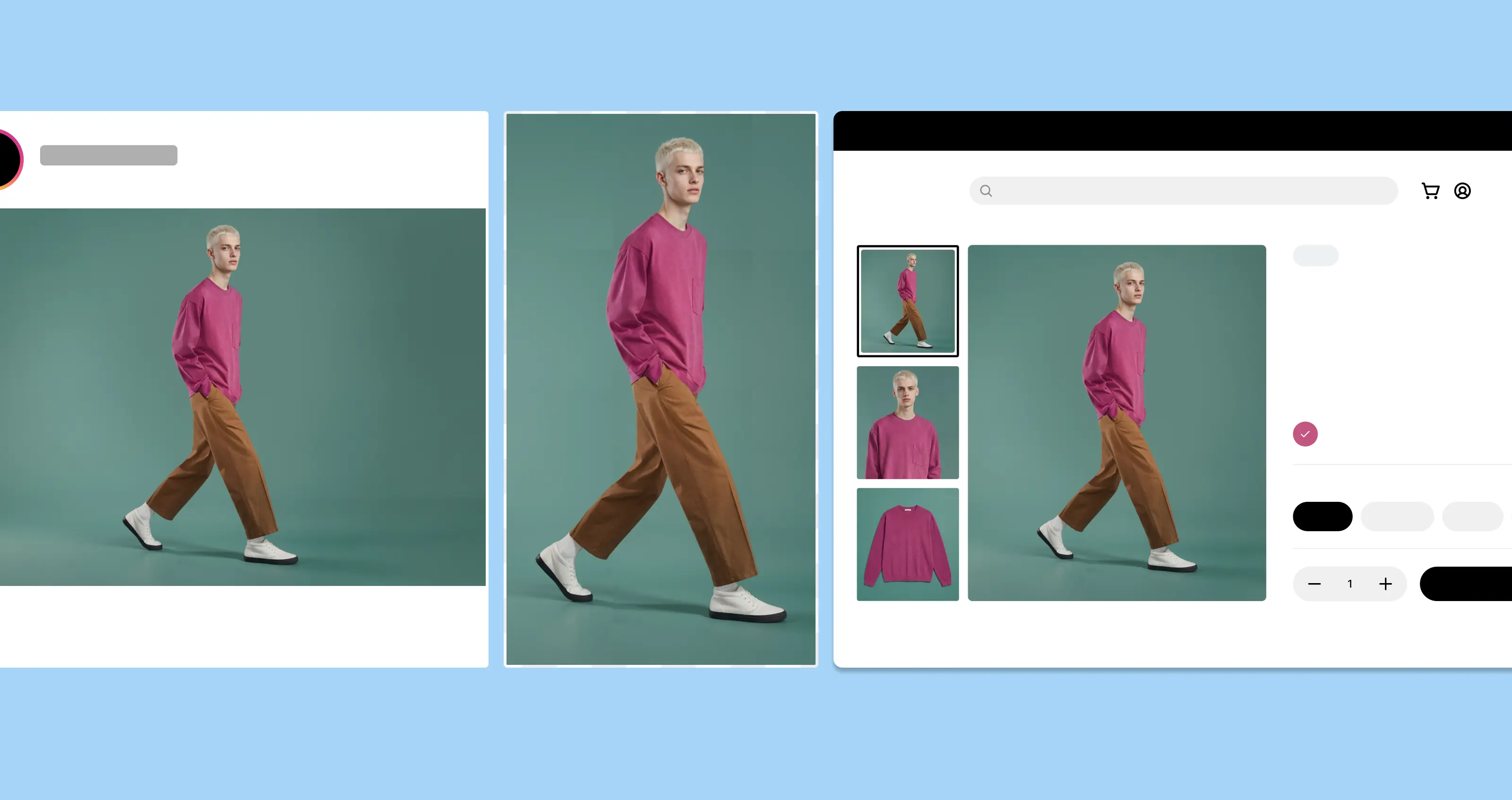
AI enables brands to simulate collections, generate realistic models, and even visualize marketing campaigns before a single garment is produced. This not only reduces costs but also speeds up decision-making.
.webp)
1. Zara
Zara leveraged AI to create realistic, eCommerce ready lookbooks that closely mirror traditional studio photography. The visuals feature natural poses, accurate lighting, and detailed textures, allowing the brand to maintain its polished aesthetic while cutting production time.
Beyond testing collections, Zara uses AI generated visuals to preview multiple product combinations and colorways, improving collaboration between marketing and design teams.
The key takeaway: AI can enhance realism and scale content without compromising brand identity.
2. Nike
Nike applied AI not only to virtual sneaker releases but also to 3D visualization of designs. This enabled marketing teams to test campaigns digitally before physical production, ensuring visuals are both innovative and on-brand.
The AI approach also allowed Nike to iterate quickly on limited-edition drops, balancing efficiency with creative experimentation.
Lesson learned: AI accelerates testing and reduces production risk while preserving creative quality.
3. Louis Vuitton
Louis Vuitton adopted AI to generate campaign imagery for global launches, maintaining the brand’s signature luxury aesthetic while speeding up production. AI simulations allowed the team to experiment with lighting, poses, and settings without costly photoshoots.
This approach enabled innovative storytelling—like virtual runway concepts and limited-edition drops—while keeping visuals authentic and consistent across markets.
The lesson: Luxury brands can use AI to scale creativity while protecting brand integrity.
4. Mango
Mango successfully used AI generated models for product imagery that matched the brand’s existing style. The visuals were praised for realism and creative direction, making AI a practical tool for scaling content. However, questions remain about the approach’s scalability across all markets.
The key takeaway: Realistic AI visuals work best when closely aligned with established brand aesthetics.
5. Guess
Guess experienced significant backlash after releasing AI generated visuals that appeared overly stylized and unrealistic. Consumers criticized the campaign for lacking authenticity and diversity. The response highlights the risk of prioritizing novelty over realism.
Lesson: AI can backfire if visuals feel “too fake,” undermining trust and engagement.
6. J.Crew
J.Crew faced similar challenges after deploying AI generated content that felt disconnected from the brand’s tone. The campaign sparked discussions about authenticity and consumer trust.
The takeaway: Human oversight remains critical to ensure AI generated content reinforces, rather than damages, brand identity.
These examples illustrate a clear pattern in fashion industry trends 2025: AI can drive efficiency, creativity and scalability, but success depends on balancing innovation with realism, brand consistency, and transparency. Brands that do it well—like Zara, Mango and Louis Vuitton—enhance storytelling and conversion, while those that neglect authenticity risk backlash.
AI for storytelling and conversion
The most exciting application of AI in fashion industry trends 2025 is in marketing and visual storytelling. Customers still shop with their eyes first, and the brands that succeeded in 2025—like Zara, Mango, and Louis Vuitton—showed that AI can enhance realism, consistency, and creativity without compromising authenticity.
AI-generated imagery allows brands to maintain a cohesive aesthetic across multiple channels, scale content creation and experiment with different campaigns for varied audiences. For example:
- Seasonal collections can be visualized digitally in multiple colorways and with different model types.
- Virtual lookbooks let teams pre-test campaigns before committing to costly photoshoots.
- Campaign variations can be tested across audience segments, improving engagement and conversion rates.

The 2025 lessons are clear: AI works best as a tool for enhancement, not a replacement. Human oversight ensures that visuals stay true to the brand voice and resonate with consumers. Brands that balance speed, innovation and authenticity see measurable gains—faster time-to-market, higher engagement, and stronger brand consistency—while those that neglect these principles risk backlash, as seen with Guess and J.Crew.
By integrating AI thoughtfully, fashion teams can turn efficiency into storytelling power, using technology to bring brand narratives to life at scale while preserving trust and cultural relevance.
Transparency and AI generated content
Another subtle but impactful shift in fashion industry trends 2025 is the growing discussion around labeling AI generated content. Transparency isn’t just ethical—it’s strategic. Consumers value authenticity, and brands that communicate AI usage thoughtfully earn trust, reinforcing long-term loyalty.
3. Controversy and ethical debates
With AI adoption comes scrutiny. Fashion industry trends 2025 include heated debates around ethics, IP and the role of technology in creative industries.
Intellectual property challenges
AI models are trained on existing imagery, which raises questions about copyright and originality. Brands must navigate how AI uses existing designs and how it generates derivative works without infringing on intellectual property.
Job displacement concerns
AI automates repetitive creative tasks, but critics argue that over-reliance could marginalize creative professionals. From photography to design ideation, AI can replace certain manual tasks—but when implemented responsibly, it frees human talent to focus on innovation, strategy and storytelling.
Maintaining authenticity
Consumers are increasingly sophisticated. AI-generated visuals that feel artificial or disconnected from a brand’s voice risk alienating audiences. Authenticity remains non-negotiable. Successful brands balance AI efficiency with human curation, ensuring the brand’s story remains genuine.
Future proofing through ethics
Brands don’t have to wait for regulation to adopt ethical standards. Defining internal frameworks for AI usage, transparency, and IP compliance is essential for long-term brand equity.
<blogcta>
Actionable insights for fashion businesses
If there’s a single lesson from the fashion industry trends 2025, it’s that brands must integrate culture, technology, and ethics strategically. Here’s what that looks like in practice:
Embrace cultural collaborations
- Partner with artists, musicians, and community leaders.
- Leverage micro-influencers and niche communities for authentic reach.
- Combine storytelling with product launches for campaigns that resonate.
Use AI responsibly
- Deploy AI for visual storytelling, content scaling, and experimentation.
- Retain human oversight to ensure brand voice and authenticity.
- Label AI-generated content where appropriate to maintain trust.
Prioritize sustainability and inclusion
- Make sustainability part of the narrative, not just the product.
- Ensure diversity and inclusion are reflected in marketing campaigns and collections.
- Align initiatives with culture and values to reinforce authenticity.
Measure impact strategically
- Track how AI-driven campaigns affect conversion rates and engagement.
- Evaluate cultural collaborations for long-term brand resonance, not just short-term sales.
- Use insights to refine both creative and operational strategies.
.webp)
.webp)
Looking ahead: Fashion industry trends 2026
The lessons from 2025 set the stage for the year ahead. Brands that integrate AI thoughtfully, embrace culture-driven collaborations, and maintain authenticity will be best positioned for growth.
AI will continue to enhance creativity, but ethical frameworks, transparency, and storytelling will define success. Consumers expect not only innovation but also responsibility, brands that meet both will lead the pack.
For 2026, focus on:
- Experimentation with boundaries
Use AI to visualize and test campaigns faster. - Cultural integration
Collaborate meaningfully, not superficially. - Ethical adoption
Respect IP, label AI content, and preserve authenticity. - Sustainability and inclusivity
Consumers reward brands aligned with values.
Fashion industry trends 2025 show that speed and technology alone don’t win. Storytelling, culture, and trust are equally important. Brands that master this balance will not just survive, they’ll thrive.

.webp)
.webp)
